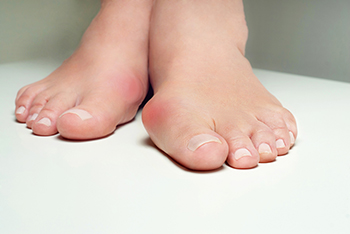
A bunion is a common structural foot deformity. It develops when the big toe moves toward the smaller toes, while the joint at the base of the toe shifts outward. This creates a prominent bump along the inside edge of the foot. Bunions can develop slowly and may remain relatively mild for years before symptoms become noticeable. As the deformity progresses, the joint may become irritated by pressure from footwear and everyday movement. Some people experience significant discomfort, while others have a visible bunion without constant pain.
Common bunion symptoms include pain, tenderness, and stiffness surrounding the affected joint. The bump may become more sensitive when it rubs against shoes, particularly shoes with a narrow or restrictive toe box. Repeated pressure and friction can cause thickened skin, calluses, or corns to develop around the joint. As the big toe moves closer to the other toes, walking mechanics may also change. In more advanced cases, the toe may overlap or push against a neighboring toe, making comfortable footwear and normal movement more difficult.
Several factors can contribute to bunion development. Genetics may play a role because inherited foot structure can influence how pressure is distributed across the foot. Wearing shoes that are narrow, tight, or poorly fitted can place additional pressure on the toes and may aggravate an existing bunion. Other risk factors include occupations that require prolonged standing and activities that repeatedly place stress on the forefoot.
Treatment depends on the severity of the bunion and the symptoms it causes. Wearing supportive footwear with adequate room for the toes, protective padding, and other conservative measures may help reduce pressure and discomfort. If you notice a growing bump at the base of your big toe, persistent pain, or swelling, it is suggested that you consult a chiropodist to explore appropriate bunion relief and management solutions.
Bunions progressively worsen over time and may cause walking in your shoes to become difficult. To learn more about bunions, please consult with Cynthia Chan, B.Sc., D.Ch from Healthy Advantage Foot & Orthotic Clinic. Our practitioner will assess your condition and provide you with quality foot and ankle treatment.
What Are Bunions?
A bunion is a bony bump that protrudes from the base of the big toe. Bunions are caused due to a misalignment of the first metatarsal. The characteristic bump of a bunion forms when the metatarsal shifts outwards from its proper position. Bunions develop slowly over time and progressively worsen without treatment. The skin over the bunion may develop calluses due to the friction from shoes. Eventually, a bunion can make walking uncomfortable or even painful. Bunions are one of the most common foot deformities and are especially common in women and older adults.
Symptoms
A bunion appears as a bulging bump on the outside of the base of the big toe.
The bunion may also:
- Be swollen, red, or sore
- Develop corns or calluses over it
- Cause pain
- Limit the big toe’s range of motion
Treatment
There are several different treatments available for bunions. Conservative treatment options include wearing shoes with a wider toe box, cushioning the bunion with a specialized pad, wearing shoe inserts, icing the bunion if it becomes inflamed, and taking medications to relieve pain. In more severe cases, more invasive procedures may be done. This may involve removing the swollen tissue around the bunion, straightening the big toe, realigning the bones at the front of the foot, or a combination of these procedures.
If you have any questions please feel free to contact our office located in Scarborough, ON .