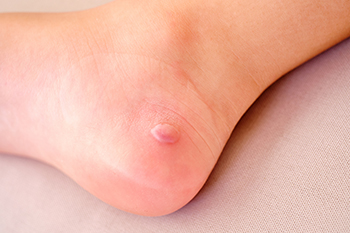
Foot blisters are fluid-filled skin lesions that develop when repeated friction damages the upper layers of the skin, causing separation and fluid buildup. This condition is common in runners, athletes, and individuals who wear tight or poorly fitted shoes. Symptoms include redness, tenderness, swelling, and a raised bubble that may be painful during walking or standing. The most common cause is friction from shoe rubbing, but blisters may also result from sunburn, scald injuries, or contact with harsh chemicals that irritate the skin. Certain medical conditions, including diabetes and skin disorders, can increase susceptibility and slow healing. Risk factors include excessive moisture, long periods of activity, and sensitive skin. Wearing improper footwear can also be a factor. Preventive measures include wearing moisture-wicking socks, ensuring proper shoe fit, and reducing repetitive pressure points. Early care helps avoid infection and discomfort. If you have frequent foot blisters, it is suggested that you consult a chiropodist to explore effective relief and management solutions.
Blisters can usually be treated at home, however, if you have recurring blisters or experience significant discomfort or pain, please consult with Cynthia Chan, B.Sc., D.Ch from Healthy Advantage Foot & Orthotic Clinic. Our practitioner will assess your condition and provide you with quality foot and ankle treatment.
What Is a Blister?
A blister is a small pocket of fluid in the upper skin layers and is one of the body’s natural responses to injury or pressure. Blisters can also result from burns, fungal or viral skin infections, and the feet are particularly prone due to ill-fitting footwear and friction. Friction on the skin causes the upper layer of skin to separate from the lower layers. The space that this separation creates then becomes filled with a liquid called serum, which protects the lower layers of skin.
Treatment
If you notice a blister on your foot, you can cover it with a soft bandage or dressing to protect it. Popping the blister is discouraged. Doing so exposes the raw skin underneath it to bacteria and also raises the risk of infection. If a blister pops naturally, let it drain before covering it with a bandage. Blisters usually heal on their own or with home treatment, however, if your blister is recurring, very painful, or appears infected, it is recommended that you see a chiropodist for treatment.
Prevention
You can help to prevent blisters by wearing comfortable, well-fitted shoes. Keep your feet dry by wearing moisture-wicking socks and dust your feet with talcum powder if they tend to get sweaty. If you have areas on your feet that are more susceptible to blisters, you might be able to prevent the blister from forming by covering it with a pad.
If you have any questions please feel free to contact our office located in Scarborough, ON .