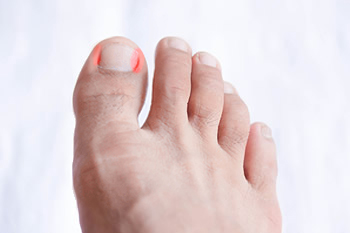
An ingrown toenail develops when the edge of a toenail grows into the surrounding skin instead of growing straight outward. The big toe is affected most often. Symptoms consist of pain, redness, swelling, and tenderness. As the nail presses deeper into the skin, it can also cause drainage or infection. Ingrown toenails are responsible for about 20 percent of foot problems and occur more often in young men. Contributing factors include cutting the nails incorrectly and repeated pressure on the toes. Wearing shoes that are too tight or shoes that lack proper support also contributes. A chiropodist can examine the affected toe, determine the cause, and recommend the most appropriate treatment. Care includes relieving pressure around the nail, managing infection when present, and helping reduce the chance of the problem returning. If you have pain from an ingrown toenail, it is suggested that you schedule an appointment with a chiropodist for diagnosis and effective relief and treatment solutions.
Ingrown toenails may require medical attention. If you have significant pain or notice signs of infection from an ingrown toenail, please consult with Cynthia Chan, B.Sc., D.Ch from Healthy Advantage Foot & Orthotic Clinic. Our practitioner will assess your condition and provide you with quality foot and ankle treatment.
What Is an Ingrown Toenail?
An ingrown toenail occurs when the edges of a toenail grow into the surrounding skin. The toenails of the big toe are usually affected, however, an ingrown toenail can happen on any toe. Sometimes, the area can become infected leading to potentially serious complications. The ingrown toenail may be caused by improper trimming of the toenail, wearing ill-fitting shoes, or injury to the nail.
Symptoms
The symptoms of an ingrown toenail include:
- Pain
- Swelling
- Redness
- Warmth
- Pus or drainage from the affected nail or a fever may indicate an infection of the area.
Treatment
Treatment depends on the severity of the ingrown toenail. In less severe cases, home treatment may be adequate. Soaking the affected foot in warm water and gently lifting the nail from the skin with a piece of clean cotton can help. In more severe cases, you may need to use topical or oral antibiotics to treat an infection. Surgical removal of the ingrown toenail may be required if more conservative treatments fail.
Ingrown toenails may be prevented by wearing well-fitted shoes and properly trimming the toenails. Toenails should be trimmed straight across and not too short when using nail clippers.
If you have any questions please feel free to contact our office located in Scarborough, ON .