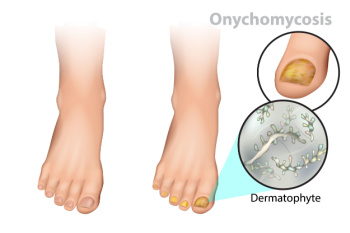
Toenail fungus, known medically as onychomycosis, occurs when microscopic fungi infect the nail tissue and the skin underneath. These fungi thrive in moist, warm environments and may cause the nail to thicken, change color, and separate from the nail bed. Although not considered dangerous, the infection can become painful and persistent, especially if left untreated. It is important to note that several other conditions, such as psoriasis or nail injuries, may resemble fungal toenail infections, so an accurate diagnosis is essential. A chiropodist can confirm the presence of toenail fungus through a lab test and recommend appropriate treatment. Options may include medicated topical solutions or oral antifungal medications, both of which require consistent use over time. Advanced cases may lead to permanent nail damage, making early evaluation important. If you have been infected by a toenail fungus, it is suggested that you schedule an appointment with a chiropodist for guidance.
Toenail fungus can be uncomfortable and unsightly. If you have diabetes or a compromised immune system, it may also be dangerous. To learn more about treatment options, please consult with Cynthia Chan, B.Sc., D.Ch from Healthy Advantage Foot & Orthotic Clinic. Our practitioner will assess your condition and provide you with quality foot and ankle treatment.
What Does Toenail Fungus Look Like?
A fungal infection of the toenail may cause the affected nail to become thickened, brittle, crumbly, and yellowish or brown in color. Sometimes the toenail may separate from the nail bed, become deformed, emit a foul odor, or cause pain or discomfort.
What Causes Toenail Fungus?
Toenail fungus is caused by a fungus that infects the nail bed. The fungus lives and thrives in warm and moist environments and is also contagious. Athlete’s foot, which is a fungal infection of the skin, may spread to the nails and cause toenail fungus.
What Treatments Are Available?
Potential treatments for toenail fungus may include oral antifungal medications, topical antifungal medications, such as medicated nail polishes that are applied directly to the affected nail, and laser therapy. Sometimes, a combination of treatments is prescribed.
If you have any questions please feel free to contact our office located in Scarborough, ON .